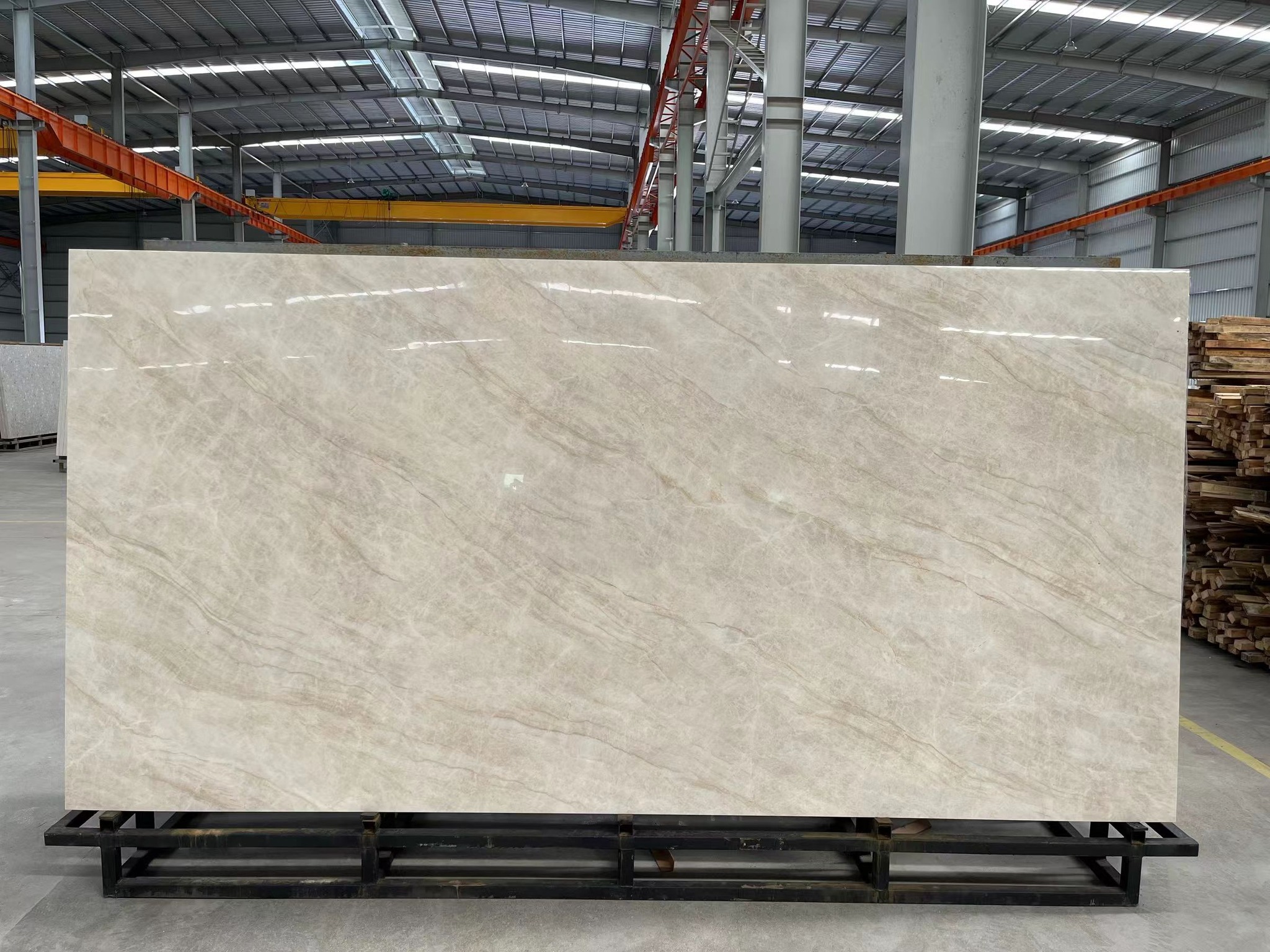
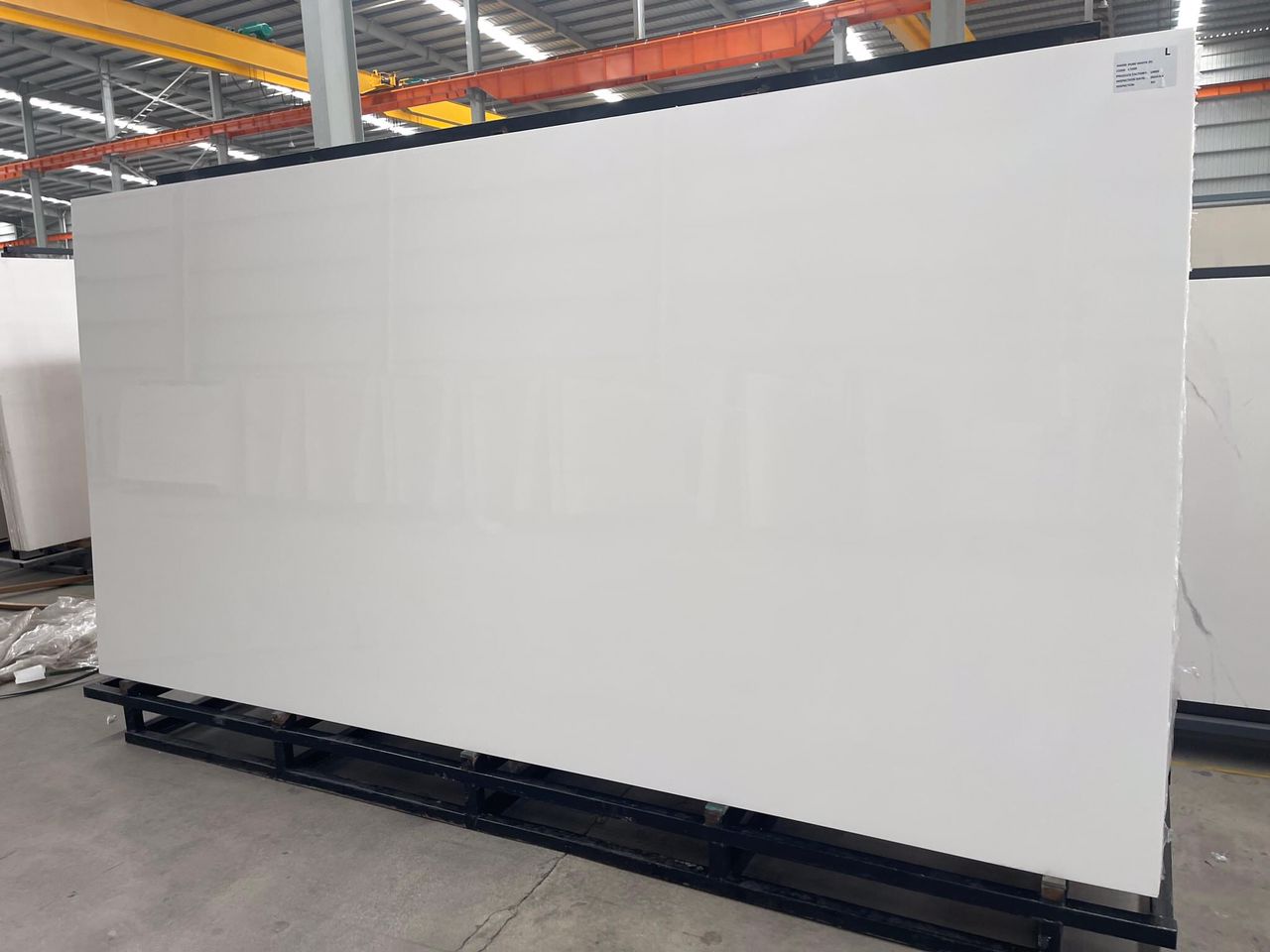
| Factor Name | Sintered Stone | Quartz Stone |
| Composition | Sintered stone is made from a blend of natural minerals and pigments that are compressed under high pressure and heat. | Quartz stone is made from natural quartz crystals and resins. |
| Durability | Sintered stone is highly durable and resistant to scratches, stains, and heat. | Quartz stone is also durable but may be less resistant to high heat and scratches. |
| Thickness | Sintered stone is typically thicker than quartz stone, with thicknesses ranging from 6mm to 20mm. | Quartz stone is usually 2cm or 3cm thick. |
| Weight | Sintered stone is denser and heavier than quartz stone, with a weight ranging from 7-26 kg/m2. | quartz stone weighs around 20-22 kg/m2. |
| Color Consistency | Sintered stone offers greater color consistency than quartz stone. For example, Neolith has Calacatta Gold and Estatuario, which both offer consistent veining patterns and tones. | Quartz stone may have more variations in color and pattern, with some colors even having visible seams between slabs. Eg: Cambria’s Brittanicca and Ella. |
| Environmental Impact | Sintered stone is made from natural raw materials, such as clays, feldspar, and silica, which are abundant and readily available, and does not contain any resin or harmful chemicals. | Quartz stone is made from natural quartz aggregates mixed with resin and other chemicals, which can have a negative impact on the environment during the manufacturing process. |
| Resistant To UV Light | Sintered stone is resistant to UV light and won’t fade over time. | Quartz stone may fade if exposed to direct sunlight. |
| Maintenance | Sintered stone requires minimal maintenance and can be cleaned with just soap and water. | Quartz stone may require regular sealing to prevent staining. |
| Cost | Sintered stone is generally more expensive than quartz stone due to its higher manufacturing process, density, and durability. | Less Expensive Comparatively. |
| Example | Neolith is a popular brand of sintered stone, made from a blend of clays, feldspar, silica, and natural mineral oxides. | Petrosstone produces quartz stone, made from 93% natural quartz and 7% resin. |