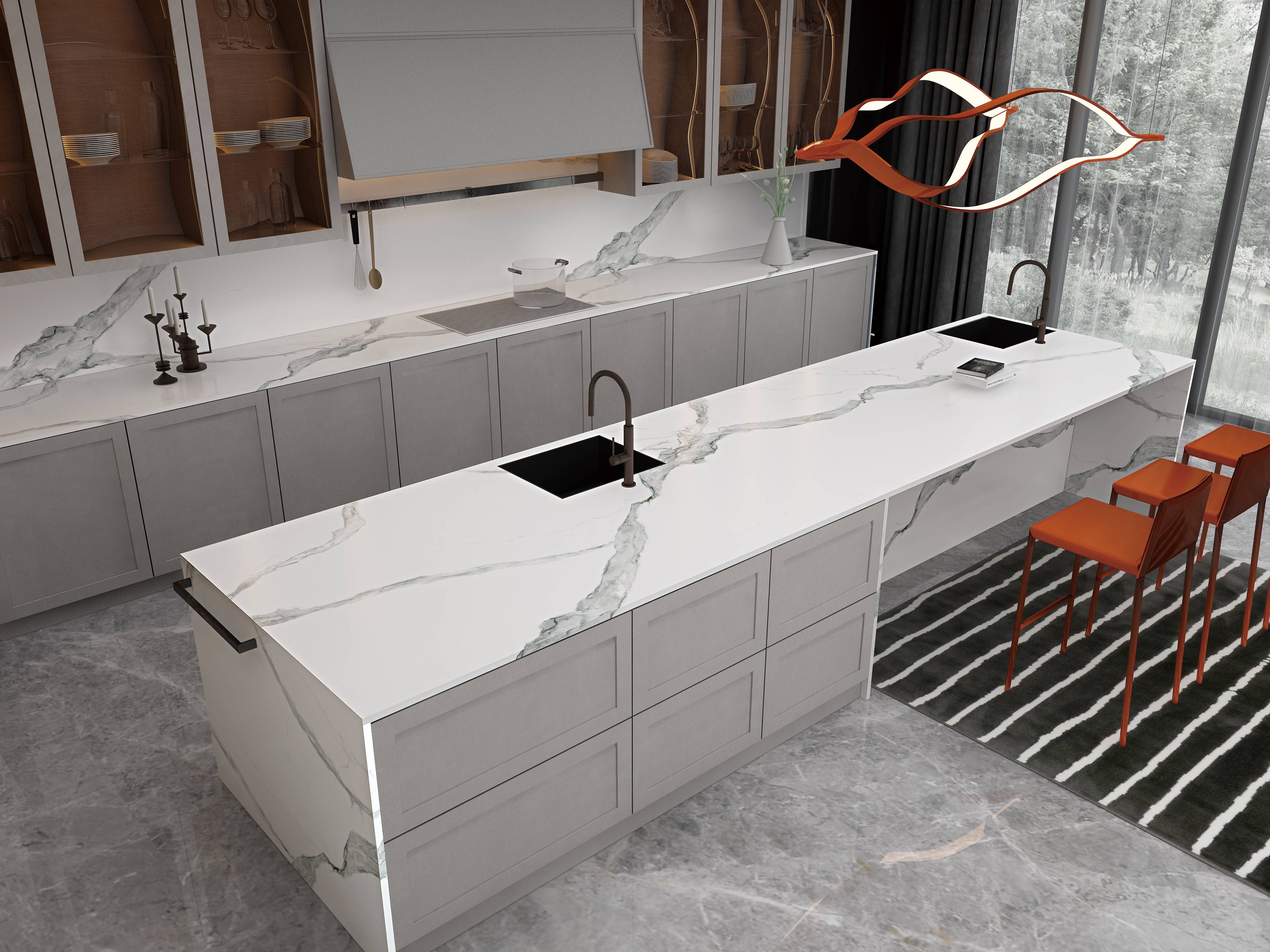
Sintered stone is often considered one of the best materials for porcelain work surfaces due to its numerous superior properties. Here are the key reasons elaborated:
-
Durability and Strength:
- High Hardness: Sintered stone is incredibly hard, often scoring high on the Mohs scale of mineral hardness. This makes it highly resistant to scratches, chips, and other forms of wear and tear.
- Impact Resistance: It is highly resistant to impact, making it less likely to crack or break under heavy usage or accidental drops.
-
Heat Resistance:
- Temperature Tolerance: Sintered stone can withstand high temperatures, which is essential for kitchen work surfaces. You can place hot pots and pans directly on the surface without causing damage or discoloration.
-
Stain Resistance:
- Non-Porous Surface: The non-porous nature of sintered stone means it does not absorb liquids. This makes it resistant to stains from common kitchen substances like wine, coffee, and oil.
- Easy Cleaning: Since it doesn’t absorb spills, it is very easy to clean with simple household cleaners.
-
Chemical Resistance:
- Resistance to Household Chemicals: Sintered stone surfaces can withstand exposure to various household chemicals and cleaning agents without losing their color or finish, unlike natural stones that might get etched by acidic substances.
-
Aesthetic Appeal:
- Variety of Finishes: Sintered stone is available in a wide range of colors, textures, and finishes. This allows for versatility in design, enabling homeowners and designers to choose the perfect look for their kitchens or bathrooms.
- Consistent Patterns: Unlike natural stone, which can have unpredictable veining and color variations, sintered stone offers more uniform patterns, making it easier to match and design around.
-
Hygiene:
- Antibacterial Properties: The non-porous nature also contributes to its hygiene, as it doesn’t harbor bacteria or mold, making it a safer choice for food preparation areas.
- Ease of Disinfection: It can be easily disinfected without damaging the surface, maintaining a hygienic environment.
-
Environmental Impact:
- Sustainable Manufacturing: The production of sintered stone often involves using natural raw materials and can be done with minimal environmental impact. Some manufacturers use eco-friendly processes and recycle materials during production.
- Longevity: Its long lifespan means it does not need to be replaced frequently, reducing waste over time.
-
UV Resistance:
- Fade Resistance: Sintered stone is resistant to ultraviolet (UV) rays, meaning it won't fade or discolor even when exposed to direct sunlight. This is especially beneficial for outdoor kitchens or areas with significant sunlight exposure.
-
Versatility:
- Wide Applications: Beyond countertops, sintered stone can be used for flooring, wall cladding, and even outdoor surfaces due to its robust properties.
- Customization: It can be cut into various shapes and sizes, providing flexibility in design and application.
In summary, sintered stone combines the best attributes of natural stone and advanced manufacturing to create a superior porcelain work surface that excels in durability, maintenance, aesthetics, and environmental sustainability.