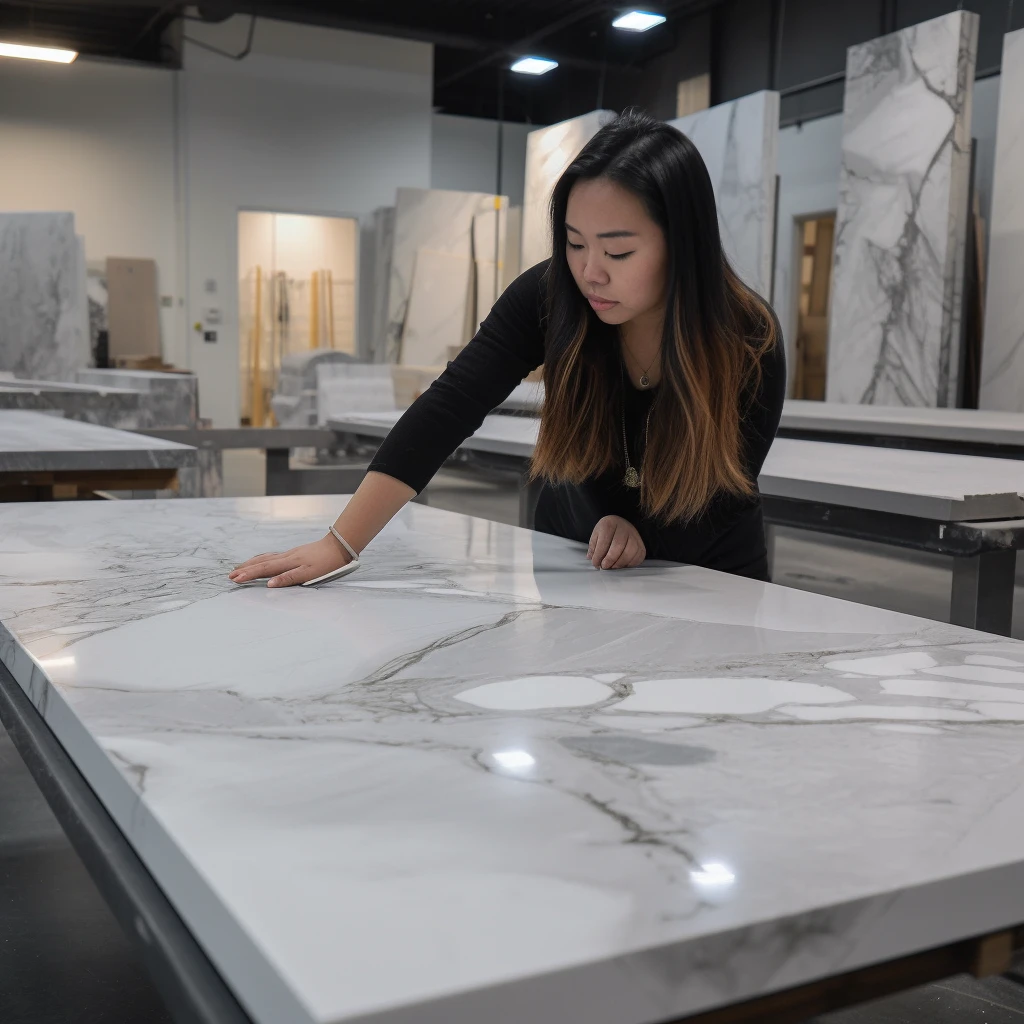
Sintered stone porcelain slabs are a revolutionary material that has taken the design and architectural world by storm. But a question that often arises is: can Sintered stone be polished? In this comprehensive guide, we delve into this question and provide a wealth of information about Sintered stone. As a leading manufacturer of Sintered stone, DiTuo brings a wealth of expertise and knowledge to this topic.
Can Sintered stone be polished?
Although Sintered stone is a versatile material, it usually cannot be polished. This is due to its hardness and the fact that polishing affects the surface texture and color. However, Sintered stone is available in a variety of finishes, including polished, so you can choose the look that best suits your project. Below are the polishing machines used in the production process at Sintered stone factories.
Polished Sintered stone slabs
Polished Sintered stone slabs
Benefits of Sintered stone porcelain slabs
Sintered stone offers numerous benefits that make it a popular choice for a variety of applications. These include:
Durable: Sintered stone is resistant to scratching, abrasion, and chipping, making it a long-lasting choice for high-traffic areas. Non-porous: Unlike natural stone, Sintered stone is non-porous, which means it won't absorb liquids or stains. This makes it easy to clean and maintain. Design Flexibility: Sintered stone is available in a wide range of sizes, colors, and patterns, offering endless design possibilities. Environmentally friendly: Sintered stone is manufactured in a sustainable process, making it an environmentally friendly choice.
Disadvantages of Sintered stone
While Sintered stone has many advantages, it is important to realize its potential disadvantages. These include:
Potential brittleness: while Sintered stone is extremely durable, it can be brittle and easily chip if not handled properly. Limitations in processing and range of applications: because of its hardness, Sintered stone is more difficult to cut and install, and often cannot be polished. Cracking Issues: Like all stones, Sintered stone is susceptible to cracking if not properly installed or subjected to extreme temperature changes.
Maintenance and care of Sintered stone Maintenance of Sintered stone is relatively simple. Regular cleaning with a mild detergent and warm water is usually enough to keep the surface of Sintered stone looking its best. For more stubborn stains, non-abrasive cleaners can be used.Check out our surface testing video
When choosing a finish for your Sintered stone, you have several options. Matte and polished finishes are two of the most popular. Matte finishes offer a more natural and understated look, while polished finishes offer a high-gloss, luxurious look. The choice between matte and polished finishes usually depends on personal preference and the specific requirements of the project.
At DiTuo, we are committed to providing the highest quality Sintered stone products. We believe in the power of innovation and constantly strive to improve our products and processes. Our commitment to quality has earned us recognition and accolades from industry professionals and customers alike.
Applications of Sintered stone
Sintered stone is versatile and can be used for a variety of purposes. These uses include countertops, vanities, and furniture.
Conclusion
While Sintered stone can often be polished, its many benefits make it a popular choice for a variety of applications. Sintered stone offers durability, design flexibility, and ease of maintenance, providing a practical and stylish solution for both residential and commercial projects. If you're interested in learning more about Sintered stone or check out our product catalogs
If you have any queries, get in touch today! Don't hesitate. We try to take the extra step for our customer satisfaction.
We will reply to your message within 24 hours
We use Cookie to improve your online experience. By continuing browsing this website, we assume you agree our use of Cookie.