How do I choose between full body sintered stone (porcelain) and marble countertops?
By DiTuo Sintered stoneJuly 11th, 2026466 views
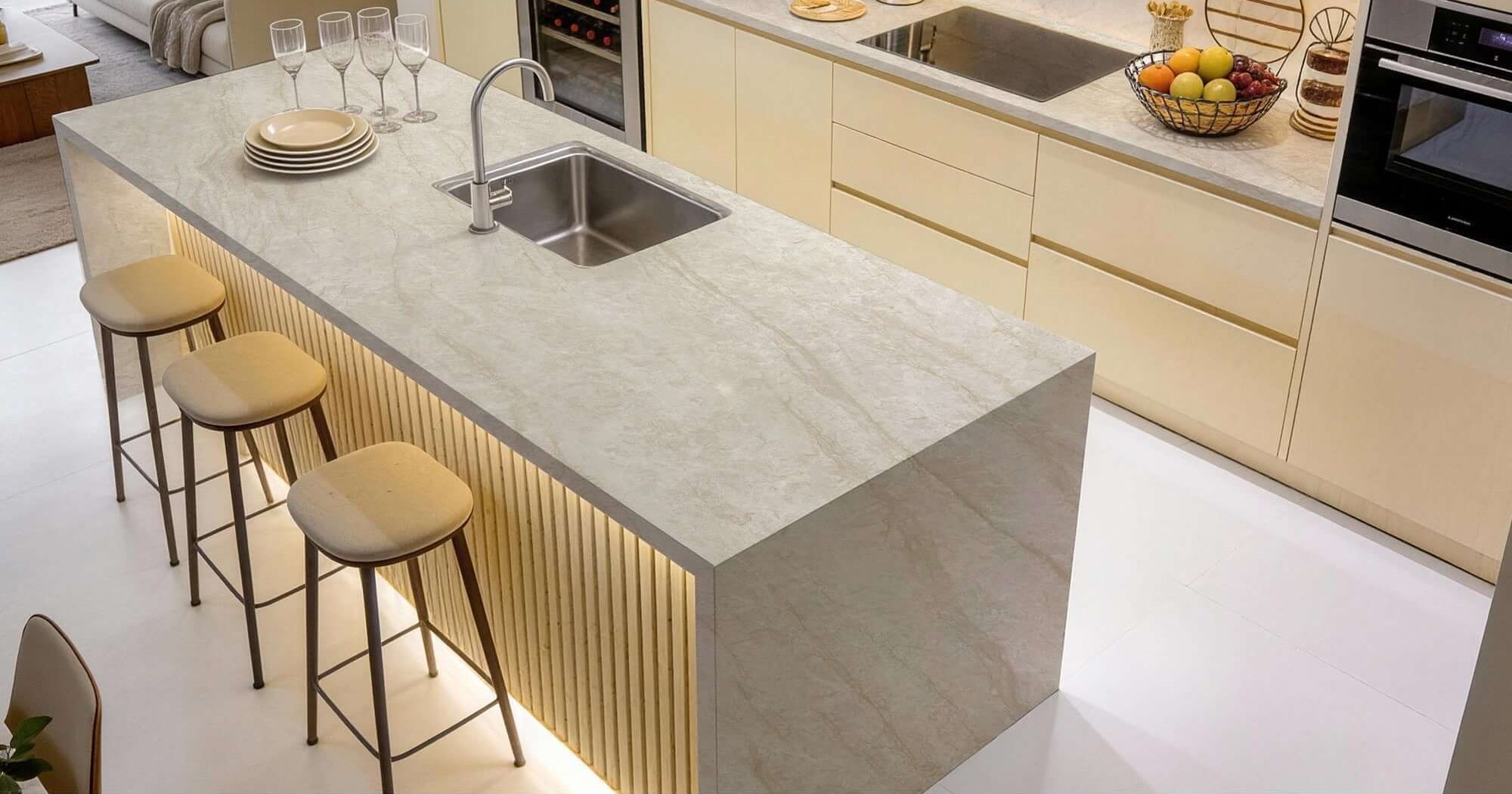
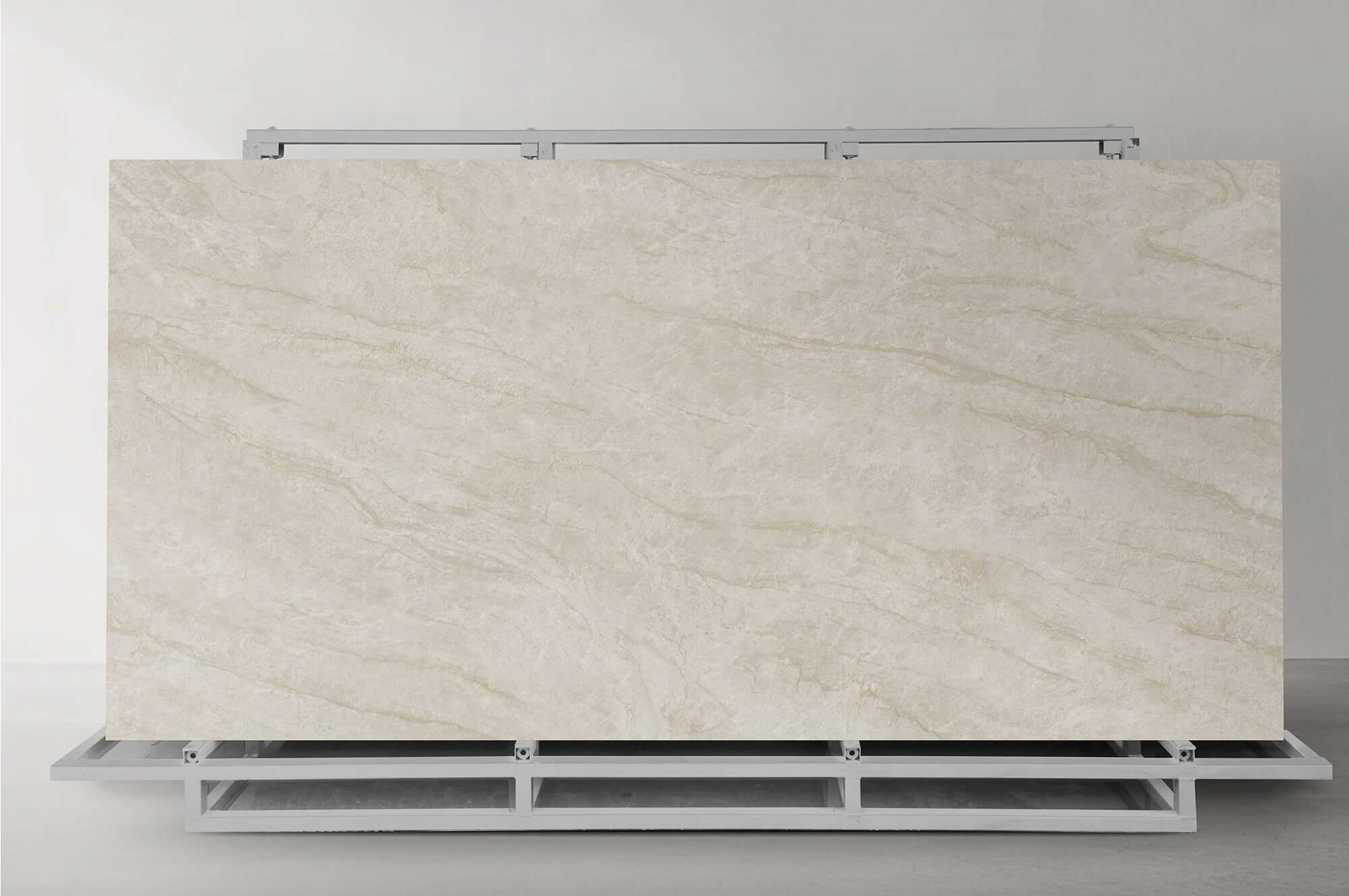
Taj Mahal Sintered stone porcelain slab Size:1600×3200×12mm/20mm Surface:Glossy/Honed Code:163212G190/163212N190
When selecting materials for countertops, walls, bathroom sinks and vanities, dining tables, or commercial spaces, marble is often one of the first materials that comes to mind. It has a natural, elegant appearance and is highly durable. However, in recent years, sintered stone has emerged as a strong alternative, particularly for projects that require durability, ease of maintenance, and a more stable supply.
So, between sintered stone and marble, which should you choose? The answer depends on your project, budget, intended use, and maintenance expectations. In this article, we’ll compare these two materials from several practical perspectives.
1. What are sintered stone and marble? Marble is a natural stone formed over millions of years. Each marble slab is unique, possessing natural textures, colors, and patterns bestowed upon it by nature. This is one of the main reasons why marble is so favored in luxury interior design. No two pieces of marble are exactly alike.
Sintered stone, on the other hand, is a man-made ceramic surface material made from natural minerals. These minerals are pressed under high pressure and fired at high temperatures, ultimately forming a dense and durable slab. Despite being man-made, sintered stone can mimic the appearance of marble, natural stone, concrete, terrazzo, wood, and many other materials.
The main difference is that marble is natural and porous, while sintered stone is man-made, making it denser, more stable, and more resistant to everyday wear and tear.
For projects where natural uniqueness is paramount, marble remains highly attractive. However, for projects requiring color consistency, ease of maintenance, and superior performance, sintered stone is often a more practical choice.
2. Durability: Which material performs better in everyday use?
Durability is one of the biggest reasons many homeowners, contractors, and processors choose sintered stone.
Marble is beautiful and elegant, but its texture is relatively soft compared to many modern surface materials. Acidic substances, such as lemon juice, vinegar, wine, or certain cleaning agents, can scratch, stain, or corrode marble. In busy kitchens, bathrooms, restaurants, and commercial spaces, this can become a maintenance issue over time.
Sintered stone is designed for everyday use and offers greater durability. It generally resists scratches, stains, high temperatures, moisture, and UV radiation effectively. Therefore, it is suitable for kitchen countertops, bathroom vanities, tabletops, wall panels, floors, outdoor areas, and commercial surfaces.
For example, in a kitchen, sintered stone is less likely to absorb oil, coffee, sauce, or wine stains. In a bathroom, it is more resistant to moisture and cleaning agents. In commercial spaces, it can withstand frequent use and cleaning.
This does not mean that sintered stone is immune to damage. Like other large slabs, it still requires proper handling, cutting, processing, and installation. Edges, corners, sink openings, and transportation all require professional handling. However, when installed properly, sintered stone is generally more durable than marble in high-traffic environments.
3. Maintenance and cost: Which one is easier to own?
Marble typically requires more maintenance. Due to its porous nature, it may require sealing treatments to protect the surface from stains. Furthermore, it needs careful cleaning. Acidic cleaners or strong chemicals can damage the surface shine. Over time, marble may require polishing, restoration, or professional maintenance to maintain its beauty.
Sintered stone is much easier to maintain. In most daily situations, it can be cleaned simply with water, a mild detergent, and a soft cloth. It usually doesn't require sealing and is less prone to common household stains.
From a cost perspective, the price of marble varies greatly depending on its type, origin, rarity, slab size, and quality. Some natural marbles are extremely expensive, especially rare colors or high-quality stones. In addition to the material cost, buyers need to consider installation, sealing, maintenance, and potential repair costs.
The price of sintered stone also varies depending on size, thickness, surface treatment, body type, design, and production quality. However, due to its more stable supply and the ability to reuse designs across different batches, sintered stone often offers better cost control for large projects.
This is crucial for importers, distributors, and contractors. Materials that look impressive but are difficult to maintain may lead to complaints later on. Materials that are of consistent quality, have a stable supply, and are easy to maintain are generally better suited for long-term projects.
4. Best Applications: When to Choose Sintered Stone, When to Choose Marble?
Both materials have their uses. The best choice depends on where and how the material will be used.
Marble is ideal when a project needs to showcase natural luxury, unique textures, and a sophisticated artistic feel. It's suitable for decorative feature walls, luxury hotel lobbies, villa interiors, around fireplaces, and other spaces where visual impact is more important than daily use.
For areas requiring durability, ease of cleaning, and stability, sintered stone is a better choice. It's particularly suitable for kitchen countertops, bathroom vanities, dining tables, cabinet surfaces, wall and floor finishes, exterior facades, commercial counters, restaurants, showrooms, and high-traffic areas.
For kitchen countertops, sintered stone is generally more practical because it's more stain-resistant, heat-resistant, and easy to clean. It performs well in bathroom spaces because it doesn't absorb water easily. For commercial projects, it helps reduce long-term maintenance issues.
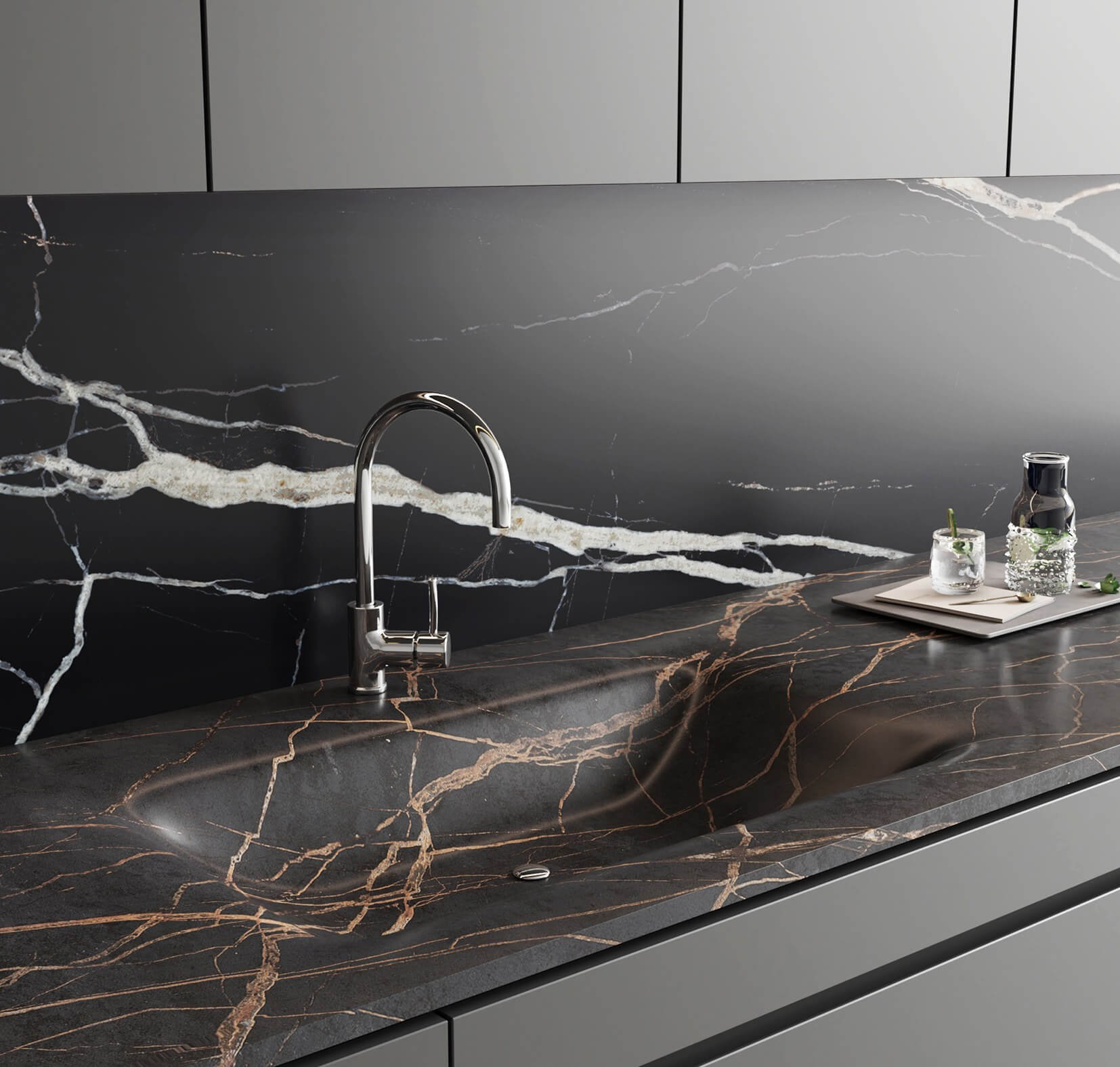
For buyers who like the look of marble but are concerned about staining, scratches, maintenance, or cost, sintered stone faux marble slabs are a good option. They can create a similar high-end visual effect while providing better practical performance.
Conclusion: Which one should you choose?
If you're looking for natural uniqueness and classic luxury, marble remains an excellent choice. It brings a natural artistic feel that man-made materials cannot fully replicate.
However, if durability, low maintenance costs, color consistency, and better everyday performance are your priorities, sintered stone ceramic slabs are often a more practical option. They are particularly suitable for modern residential projects, commercial spaces, kitchen countertops, bathroom vanities, furniture, and large-scale building projects.
Before making a final decision, consider where the material will be used, how often it will be cleaned, the level of maintenance the user can accept, and whether the project requires natural uniqueness or consistent consistency.
If you are also looking for a reliable sintered stone supplier in China, feel free to contact us directly.
If you have any queries, get in touch today! Don't hesitate. We try to take the extra step for our customer satisfaction.
We will reply to your message within 24 hours
We use Cookie to improve your online experience. By continuing browsing this website, we assume you agree our use of Cookie.