Discussing the Distinct Differences Between Sintered Stone and Porcelain Tiles: A Deep Dive into Material Composition, Manufacturing Processes, and Applications
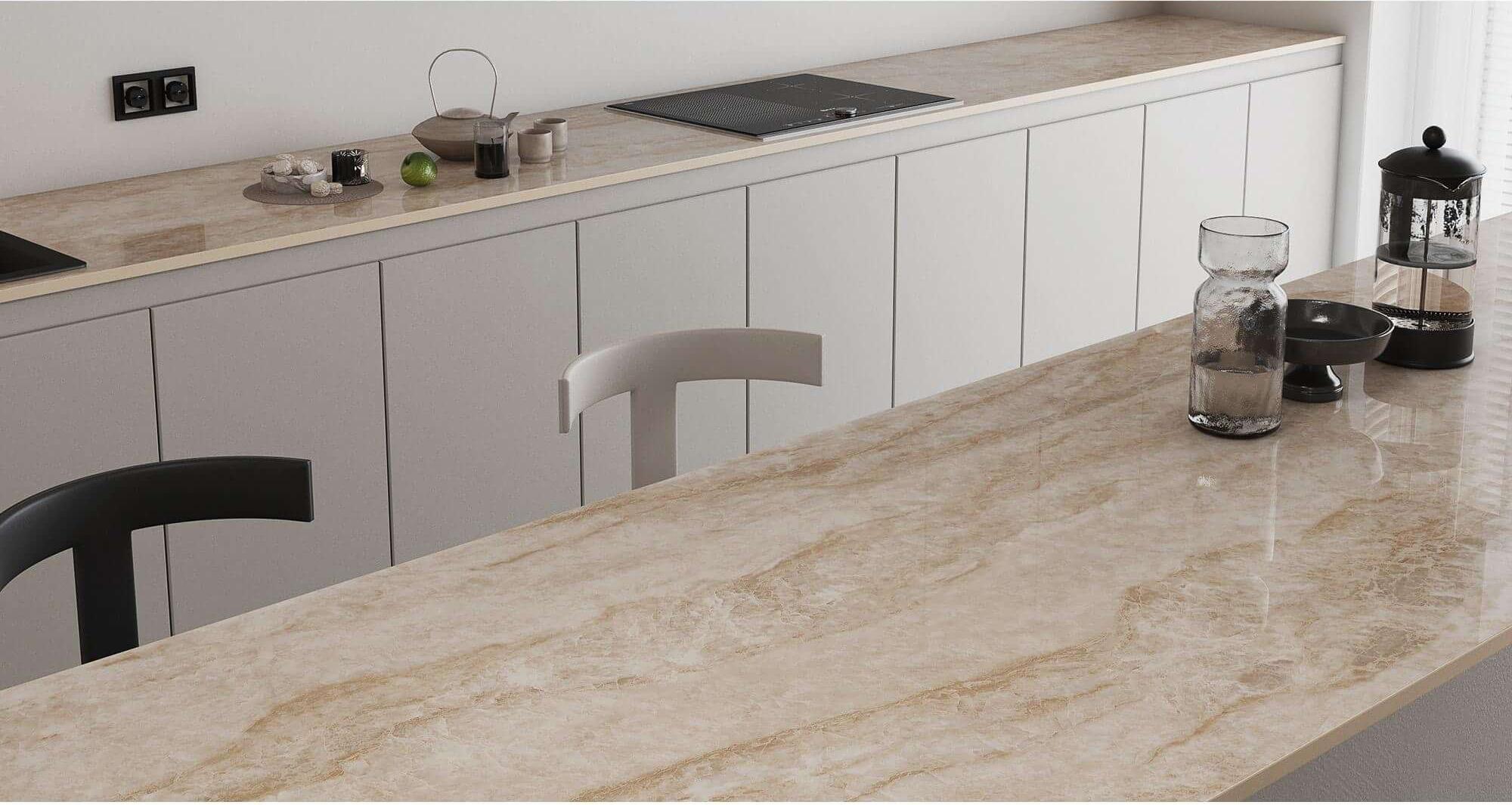
Table of Contents
- Sintered Stone vs Porcelain Tile Material Composition
- Sintered Stone vs Porcelain Tile Manufacturing Process
- Sintered Stone and Porcelain Tile Thicknesses and Application Areas
- Why We Chooseed Sintered Stone
Sintered Stone vs Porcelain Tile Material Composition
When comparing sintered stone and porcelain tiles, understanding their material compositions is fundamental. Both materials offer durability and aesthetic appeal, but their compositions significantly differentiate them.
Sintered Stone: Sintered stone, often referred to as ultra-compact surface or surface, is composed primarily of natural minerals such as quartz, feldspar, and clay. The unique manufacturing process involves sintering these minerals at extremely high temperatures, resulting in a non-porous, dense surface. This composition ensures high resistance to scratches, stains, and heat, making it an ideal choice for various applications.
Porcelain Tile: Porcelain tiles, on the other hand, are made from finer clay particles and fired at high temperatures, creating a vitreous or glassy surface. They are characterized by their low rates, typically less than 0.5%, which contributes to their durability and resistance to frost and staining. However, unlike sintered stone, porcelain tiles may not always have the same high mineral content, leading to slight differences in hardness and resistance properties.
Sintered Stone vs Porcelain Tile Manufacturing Process
The manufacturing processes of sintered stone and porcelain tiles, while similar in some aspects, differ significantly in others, contributing to their unique properties Sintered Stone Manufacturing Process:
- Raw Material Preparation: Natural minerals are carefully selected and blended to achieve the desired color and texture.
- Compaction: The blend is pressed under high pressure to form a dense, compact slab.
- Sintering: The slab is then sintered in a kiln at temperatures exceeding 1200°C. This high-temperature process vitrifies the material, making it extremely dense and non-porous.
- **Fin After sintering, the surface is polished or textured to achieve the desired finish.
Porcelain Tile Manufacturing Process:
- Clay Preparation: High-quality clay is mixed with water and other additives to form a malleable mixture.
- Shaping: The mixture is pressed or extruded into tiles of various shapes and sizes.
- Drying: The tiles are dried to remove excess moisture.
- Firing: The dried tiles are fired in a kiln at temperatures ranging1100°C to 1300°C to vitrify the surface and harden the material.
- Glazing (Optional): Some porcelain tiles may undergo an additional glazing process to enhance their appearance and durability.
Sintered Stone and Porcelain Tile Thicknesses and Application Areas
The thicknesses and application areas of sintered stone and porcelain tiles also differ, guiding their suitability for.
Sintered Stone:
- Thicknesses: Typically ranges from 9mm to 20mm, allowing for substantial countertop and flooring installations.
- Application Areas: Due to its exceptional durability and aesthetic appeal, sintered stone is ideal for high-traffic areas such as kitchen countertops, bathroom vanities, flooring, and even outdoor spaces.
Porcelain Tile:
- Thicknesses: Can vary widely, from thin tiles (8-9mm) used in to thicker tiles (12mm) suitable for flooring.
- Application Areas: Porcelain tiles are versatile and can be used for walls, floors, countertops, and even exterior paving. Their resistance to weather and wear makes them excellent for both residential and commercial settings.
Why We Choose Sintered Stone
Despite the versatility of porcelain tiles, sintered stone offers several compelling advantages that make it a preferred choice for.
- Durability: With its high mineral content and non-porous nature, sintered stone is exceptionally resistant to scratches, stains, and heat, outperforming many porcelain tiles in these areas.
- Aesthetic Appeal: Sintered stone can mimic the look of natural stone and marble with exceptional realism, offering a luxurious and modern aesthetic.
- Versatility: Suitable for both indoor and outdoor applications, sintered stone can withstand the rigors of daily use and the elements, making it a reliableterm investment.
- Sustainability: Many sintered stone manufacturers, including DiTuo, prioritize sustainable practices, ensuring that the material's production has minimal environmental impact.
- DiTuo Sintered stone products range from 9mm floor and wall series to 12, 15, 20mm countertops, bathroom cabinet surfaces series, full coverage, one-stop shopping for distributor contractors